
I am seeing a lot of posts that have some interesting comments about licensing. However many are not referencing Microsoft’s own how to buy documentation.
http://www.microsoft.com/exchange/2010/en/us/licensing.aspx
This provides pretty solid information about what is needed for Database Availability or as some people might call it. High availability. I have seen some posts around Exchange 2010 standard addition HA. Which really there never was such a thing. There was LCR which is now gone. However now you can use Standard edition of exchange loaded on a windows 2008 Enterprise server and start a Database Availability group better known as a DAG.
I have seen many discussions around 2 server HA in small environments. and yes this is possible. however in order to do it. You must have the following.
- 2 windows server 2008 Enterprise Edition Server licenses
- 2 Exchange 2010 Standard Edition Server licenses
- Enough CALS for all your users.
the hardware is not as big a deal as it used to be. the hardware can be dissimilar however it is at least recommended that both machines have 2 nics. The servers do have to be 64 bit.
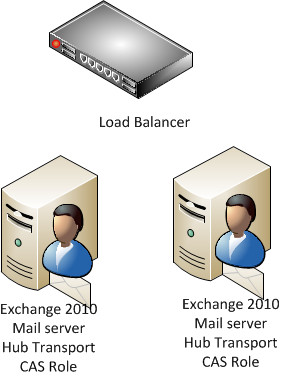
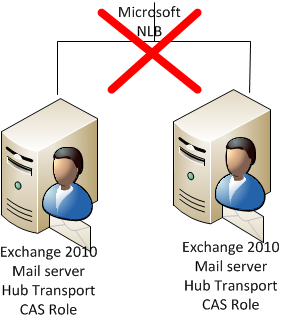
Now you will find some documentation that states a load balanced CAS server can not be on a Mailbox role with a DAG. The specific on that is that you cannot use MICROSOFT NETWORK LOAD BALANCING with the CAS roles installed on a Server that has DAG implemented. so in this case you have to implement either hardware load balancing or use ISA load balancing.
Hope that helps

 Mitch's Blog